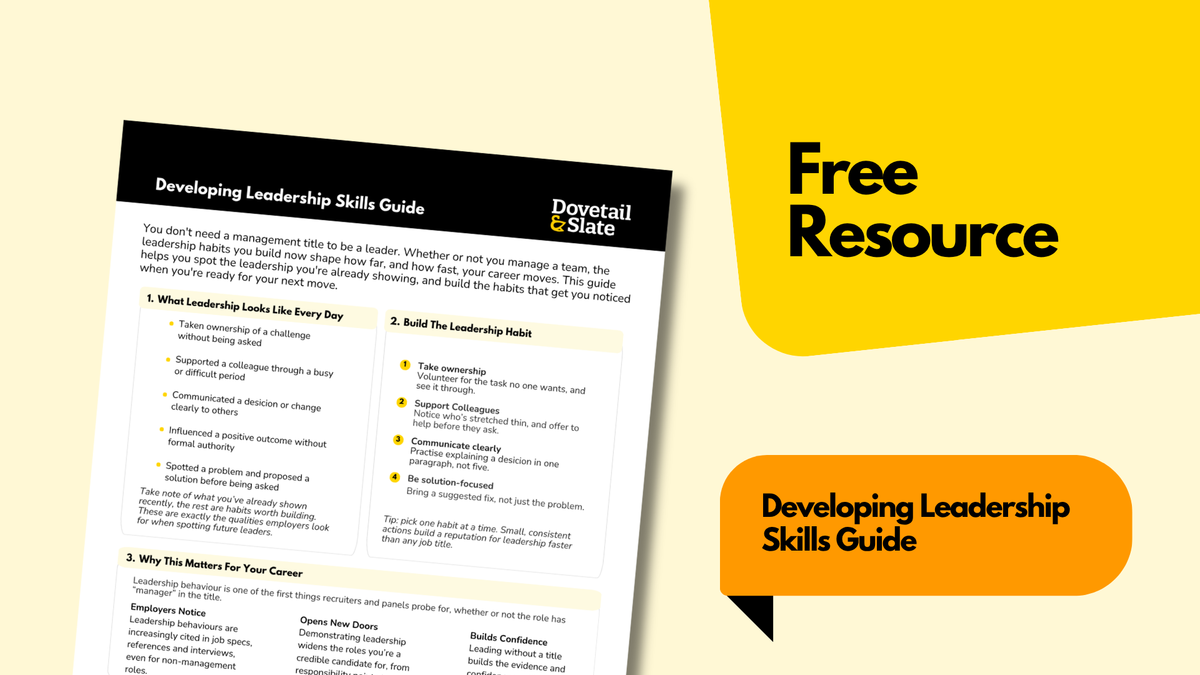
A practical guide to help education and public sector professionals recognise the leadership they're already showing and build the habits that get them noticed for their next role.
Recognise leadership behaviours you're already demonstrating day to day
Build a simple, repeatable habit for developing leadership skills over time
Understand why leadership behaviour matters to recruiters and panels, even in non-management roles
Widen the range of roles you're a credible candidate for
Build the confidence and evidence needed before applying for a formal leadership position
Developing Leadership Skills Guide
You don't need a management title to be a leader. Whether or not you manage a team, the leadership habits you build now shape how far, and how fast, your career moves. This guide helps you spot the leadership you're already showing, and build the habits that get you noticed when you're ready for your next move.
What Leadership Looks Like Every Day
Take note of what you've already shown recently, the rest are habits worth building. These are exactly the qualities employers look for when spotting future leaders.
Have you recently: Taken ownership of a challenge without being asked Supported a colleague through a busy or difficult period Communicated a decision or change clearly to others Influenced a positive outcome without formal authority Spotted a problem and proposed a solution before being asked
Build The Leadership Habit
Tip: pick one habit at a time. Small, consistent actions build a reputation for leadership faster than any job title.
Take ownership Volunteer for the task no one wants, and see it through.
Support colleagues Notice who's stretched thin, and offer to help before they ask.
Communicate clearly Practise explaining a decision in one paragraph, not five.
Be solution-focused Bring a suggested fix, not just the problem.
Why This Matters For Your Career
Leadership behaviour is one of the first things recruiters and panels probe for, whether or not the role has "manager" in the title.
Employers notice Leadership behaviours are increasingly cited in job specs, references and interviews, even for non-management roles.
Opens new doors Demonstrating leadership widens the roles you're a credible candidate for, from responsibility points to senior positions.
Builds confidence Leading without a title builds the evidence and confidence you'll need when you're ready to apply for one.
Keep Building Forward
Be kind to yourself, celebrate small progress, and keep saying yes to what moves you forward.
Tips for moving forward: Take ownership. Support others. Communicate clearly. Stay proactive.
Thinking ahead to leadership development?
We'd be happy to share market insight, candidate trends and workforce planning advice with your organisation. The strongest talent pipelines are built long before they're needed.