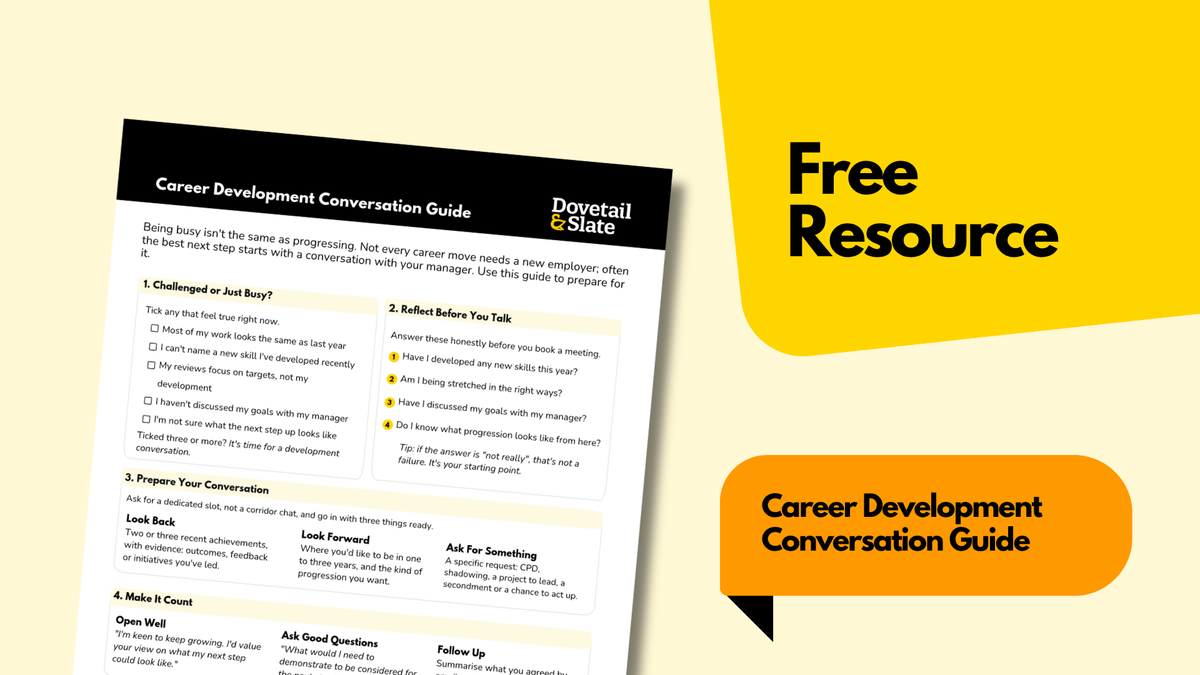
Busy isn't the same as progressing. This free guide helps education and public sector staff spot when they've stalled, prepare for a development conversation with their manager, and make it count.
Spot the signs you're busy rather than genuinely challenged
Reflect on your progress with four simple, honest questions
Walk into the meeting with achievements, goals and a clear request ready
Use ready-made phrases to open the conversation with confidence
Turn a one-off chat into real progress with a simple follow-up plan
Career Development Conversation Guide: How to Talk to Your Manager About Your Next Step
Being busy isn't the same as progressing. In colleges, schools, local authorities and across the public sector, it's easy for a full diary to feel like growth – until you look back and realise this year looks a lot like last year.
The good news? Not every career move needs a new employer. Often the best next step starts with a conversation with your manager. This guide will help you prepare for it, so you walk in with clarity and walk out with a plan.
1. Are You Challenged or Just Busy?
Start with a quick check-in. Which of these feel true for you right now?
Most of my work looks the same as last year
I can't name a new skill I've developed recently
My reviews focus on targets, not my development
I haven't discussed my goals with my manager
I'm not sure what the next step up looks like
Ticked three or more? It's time for a development conversation.
2. Reflect Before You Talk
Before you book a meeting, answer these four questions honestly:
Have I developed any new skills this year?
Am I being stretched in the right ways?
Have I discussed my goals with my manager?
Do I know what progression looks like from here?
If your answer to any of them is "not really", that's not a failure. It's your starting point – and it gives you something concrete to bring to the conversation.
3. Prepare Your Career Development Conversation
Ask for a dedicated slot, not a corridor chat. Managers in education and the public sector are stretched too, so booking proper time shows you're serious and gives them space to think. Then go in with three things ready.
Look back
Pick two or three recent achievements and back them up with evidence: outcomes you've delivered, feedback you've received or initiatives you've led.
Look forward
Think about where you'd like to be in one to three years and the kind of progression you want. That might be a step up, a sideways move into a new area, or deepening your specialism.
Ask for something
Go in with a specific request. For example:
CPD or a qualification
Shadowing a colleague in a role you're interested in
A project to lead
A secondment
A chance to act up
A clear ask is far easier for a manager to say yes to than a general "I'd like to progress".
4. Make the Conversation Count
Open well
Set a positive, forward-looking tone from the start:
"I'm keen to keep growing. I'd value your view on what my next step could look like."
Ask good questions
Find out exactly what's expected of you:
"What would I need to demonstrate to be considered for the next step?"
Follow up
Summarise what you agreed in an email, then book a review within six to eight weeks. This keeps momentum going and turns a good conversation into actual progress.
Your Four Steps at a Glance
Reflect honestly – check whether you're challenged or just busy
Prepare well – look back, look forward and know what you'll ask for
Start the conversation – book a dedicated slot and open with intent
Follow up – put it in writing and book a review
Keep Moving Forward
Career development isn't a one-off event. Keep asking for what you need and take one small step at a time.
Feeling Stuck?
If you're unsure about your next step, or simply want to understand what opportunities exist in the education and public sector market, we're always here for a confidential conversation. Sometimes clarity starts with a simple chat.